Digital Content Strategy Example – Driving Gippsland Growth
- Eddie The Chef

- Jan 4
- 7 min read

Most australian retail businesses find that more than 60 percent of local shoppers research products online before stepping into a store. For marketing managers in Gippsland, understanding the power of a tailored digital content strategy can mean the difference between being overlooked or becoming a preferred choice in the community. This guide offers practical insights and easy-to-adopt tactics focused on what actually works for regional Victoria retailers aiming for measurable results.
Table of Contents
Key Takeaways
Point | Details |
Digital Content Strategy is Essential | Businesses in Australia, especially in Gippsland, must develop a comprehensive digital content strategy to enhance online presence and engage local audiences effectively. |
Audience Understanding Drives Content | Conduct thorough audience research to create content that resonates with local consumers, aligning it with specific community needs. |
Diverse Content Types for Engagement | Utilise a variety of content formats, including blog posts and videos, to maintain relevance and foster community connections. |
Measure Success Beyond Metrics | Evaluate digital content success by focusing on user experience, community engagement, and the impact of content on local business performance. |
Defining Digital Content Strategy in Australia
A digital content strategy is a comprehensive plan that guides how businesses create, distribute, and manage digital content to achieve specific marketing and communication objectives. In the Australian context, this approach is particularly crucial for regional businesses looking to expand their online presence and connect with local audiences. The Australian Government’s digital transformation vision emphasises creating connected, accessible, and user-centric digital experiences across various sectors.
For Gippsland businesses, a robust digital content strategy involves understanding your target audience, identifying the most effective digital channels, and creating content that resonates with local consumers. This means developing a strategic approach that goes beyond simple website updates or sporadic social media posts. The strategy should include clear goals, content types that align with your brand, consistent messaging, and measurable outcomes that demonstrate real business growth.
The key components of an effective digital content strategy typically include audience research, content planning, creation of diverse content formats (such as blog posts, videos, infographics), strategic distribution across multiple platforms, and ongoing performance measurement. In the Australian digital landscape, this means tailoring content to local preferences, understanding regional communication nuances, and leveraging platforms that have the highest engagement among your target demographic.
Pro tip: Start by conducting a comprehensive audit of your existing digital content to identify gaps, strengths, and opportunities for improvement in your current communication approach.
Types and Examples for Local Retailers
Local retailers in Gippsland can leverage diverse digital content types to enhance their online presence and engage customers effectively. Content strategies for Australian businesses emphasise creating varied content that addresses specific user needs and showcases local expertise. These strategies typically include a mix of educational, storytelling, and visually compelling content designed to connect with the community.
Some practical content types for local retailers include:
Location-specific blog posts highlighting local events
Customer success stories and testimonials
Behind-the-scenes videos showing business operations
Informative product guides and how-to content
Local community engagement posts
Seasonal promotional content relevant to Gippsland
Successful local retailers understand the importance of hyperlocal content strategies that optimise digital listings and create suburb-specific pages. This approach helps businesses improve local search visibility and build stronger connections with their immediate community. By focusing on authentic storytelling and creating content that resonates with local customers, retailers can differentiate themselves in a competitive digital marketplace.

Pro tip: Develop a content calendar that aligns your digital content with local Gippsland events, seasonal changes, and community interests to maintain relevance and engagement.
Core Components: Planning and Channel Choices
A successful digital content strategy requires meticulous planning and strategic channel selection. Digital transformation planning emphasises understanding user needs, aligning business objectives, and creating a comprehensive approach that connects with target audiences effectively. This involves conducting thorough research to map out the entire content ecosystem and identify the most appropriate digital channels for your specific business context.
Key components of strategic content planning include:
Conducting comprehensive audience research
Defining clear content goals and objectives
Performing a detailed content audit
Establishing content governance frameworks
Developing SEO and distribution strategies
Creating measurement and performance tracking mechanisms
Channel selection is critical and requires careful consideration of where your target audience is most active. Content strategy frameworks recommend evaluating platforms based on user engagement, relevance to your business, and potential for meaningful interaction. For Gippsland businesses, this might mean prioritising local social media groups, regional online forums, and targeted digital advertising platforms that resonate with the local community.
Pro tip: Create a dynamic channel matrix that rates each potential digital platform against your specific business objectives, audience demographics, and content capabilities to make informed strategic choices.
Here’s a comparison of popular digital channels for Gippsland businesses:
Channel Type | Community Engagement | Cost Effectiveness | Recommended Use Case |
Local Social Media | Very high | Low to moderate | Community events, promotions |
Regional Forums | High | Low | Customer support, Q&A discussions |
Targeted Digital Ads | Moderate | Flexible (scalable) | Seasonal sales, lead generation |
Business Blog | Moderate | Low | Sharing expertise, local storytelling |
Key Roles and Common Risks for SMEs
Small to medium enterprises in Gippsland face unique challenges when developing digital content strategies. Digital transformation journeys for Australian SMEs reveal complex dynamics involving limited resources, technological constraints, and the need for strategic skill development. Understanding these challenges is crucial for businesses seeking to navigate the digital landscape effectively.
Key roles in successful digital content implementation typically include:
The following table summarises key roles and the value they add to a digital content strategy:
Role | Main Responsibility | Business Impact |
Leadership Champion | Direction and advocacy | Drives adoption and vision |
Content Strategist | Designing content plans | Ensures alignment with goals |
Digital Specialist | Technical execution | Optimises platform performance |
Content Creator | Producing creative assets | Builds engaging, relevant material |
Performance Analyst | Tracking and analysis | Informs improvements and results |
Leadership Champions: Executives driving digital transformation
Content Strategists: Professionals designing content approaches
Digital Specialists: Technical experts managing implementation
External Advisors: Consultants providing strategic guidance
Content Creators: Writers, designers, and multimedia specialists
Performance Analysts: Team members tracking content effectiveness
Common risks for SMEs involve digital content strategy challenges such as inconsistent messaging, inadequate governance, restricted digital skills, and limited financial resources. Businesses must proactively address these risks by investing in staff training, developing clear strategic frameworks, and maintaining flexibility in their digital approaches. Cybersecurity concerns and technology integration also represent significant potential obstacles that require careful management and strategic planning.
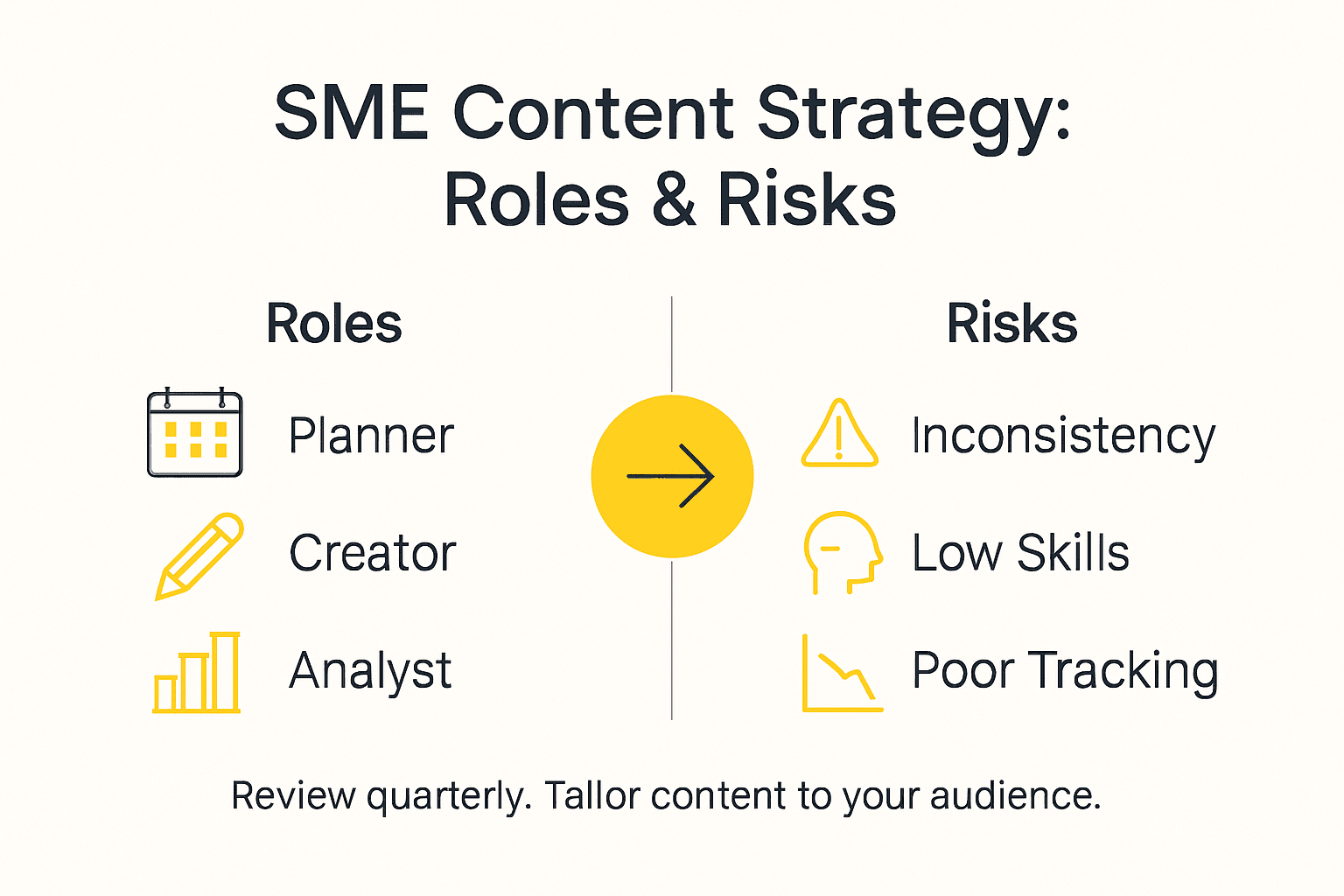
Pro tip: Conduct a quarterly digital skills audit to identify potential knowledge gaps and create targeted training programs that strengthen your team’s digital content capabilities.
Evaluating Success and Standout Regional Wins
Measuring the effectiveness of digital content strategies requires a comprehensive and nuanced approach tailored to regional business contexts. Digital government strategy evaluations demonstrate that success goes beyond simple metrics, focusing instead on tangible improvements in accessibility, user experience, and community engagement. For Gippsland businesses, this means developing robust frameworks that capture both quantitative performance indicators and qualitative community impact.
Key performance metrics for evaluating digital content success include:
Website traffic and engagement rates
Conversion rates and lead generation
Social media interaction and reach
Customer feedback and satisfaction scores
Return on digital investment
Content sharing and referral metrics
Regional digital transformation initiatives highlight the importance of contextualised measurement approaches. Standout regional wins often emerge from strategies that demonstrate authentic community connection, innovative problem solving, and measurable economic or social impact. This means going beyond traditional marketing metrics to understand how digital content genuinely improves local business performance and community engagement.
Pro tip: Create a customised scorecard that tracks both standard digital metrics and region specific indicators to get a holistic view of your content strategy’s true effectiveness.
Unlock Gippsland Growth with a Tailored Digital Content Strategy
Many Gippsland businesses struggle with limited resources, inconsistent messaging, and finding the right digital channels to truly connect with their local community. This article highlights the critical need for a well-planned digital content strategy that includes audience research, diverse content creation, and strategic distribution to build meaningful engagement and measurable business growth.
At Marketing Recipes Australia, we specialise in helping regional Australian businesses overcome these exact challenges. With over 30 years of experience, our “kitchen-inspired” approach combines expert video production, creative content creation, and multi-channel marketing crafted specifically for local markets like Gippsland. Whether you need a comprehensive digital content strategy or engaging video marketing, our tailored solutions help you resonate with your audience and stand out.
Discover how our holistic menu of services including social media management, email campaigns, and bespoke content can elevate your local business.

Ready to transform your digital presence and drive real results in Gippsland? Visit Marketing Recipes Australia today to learn more and start building your customised content strategy that truly connects with your community.
Frequently Asked Questions
What is a digital content strategy?
A digital content strategy is a comprehensive plan that guides businesses in creating, distributing, and managing digital content to meet specific marketing and communication objectives.
How can local retailers in Gippsland enhance their online presence?
Local retailers can enhance their online presence by leveraging diverse digital content types such as blog posts, customer testimonials, and behind-the-scenes videos that resonate with the local community.
What are key components of an effective digital content strategy?
Key components include audience research, content planning, diverse content creation, strategic distribution across platforms, and ongoing performance measurement to ensure alignment with business goals.
How can businesses measure the success of their digital content strategy?
Businesses can evaluate success by tracking metrics like website traffic, conversion rates, social media engagement, customer feedback, and overall return on digital investment.
Recommended
Comments