Understanding the Role of Social Media in Business
- Eddie The Chef

- Oct 9, 2025
- 8 min read

Social media is everywhere and it connects billions of people every single day. But what if you discovered that Aussie small businesses using social media are growing faster than their offline-only rivals? Most folks think these platforms are just for sharing memes or keeping in touch with mates but they are actually rewriting the rules of business success across Australia.
Table of Contents
Quick Summary
Takeaway | Explanation |
Engage directly with customers | Social media allows real-time interactions, fostering relationships between businesses and their customers. |
Leverage targeted marketing tools | Utilize advanced targeting capabilities on social media platforms to reach specific audiences effectively. |
Create consistent, valuable content | Develop purposeful content that aligns with your brand and resonates with your audience for better engagement. |
Monitor analytics to refine strategies | Use social media analytics to track performance, refine campaigns, and make data-driven decisions for growth. |
Cultivate trust through authenticity | Share genuine stories and insights to build emotional connections and trust with your audience online. |
The Essence of Social Media: What Is It?
Social media represents a digital ecosystem where individuals and businesses connect, communicate, and share content across interconnected online platforms. Digital technologies have transformed how we interact, turning communication from a one-way broadcast into a dynamic, multi-directional conversation.
Understanding the Core Concept
At its foundation, social media is more than just websites or mobile apps. It is a complex network of digital channels enabling real-time interaction, content sharing, and community building. These platforms allow users to create personal profiles, share multimedia content, engage with others through comments and reactions, and build virtual networks that transcend geographical boundaries.
The fundamental characteristics of social media include:
Interactive communication between users
Ability to share various content types (text, images, videos)
User-generated content creation
Instantaneous global connectivity
Social Media’s Technological Infrastructure
Under the surface, social media platforms operate through sophisticated algorithms that curate personalised user experiences. These systems analyse user behaviour, preferences, and interactions to deliver targeted content, recommendations, and advertisements. Our guide on social media management provides deeper insights into how these technological frameworks function.
From professional networking platforms to visual content sharing sites, social media has evolved into a diverse digital landscape that serves multiple purposes. Whether connecting with friends, sharing professional achievements, or promoting business offerings, these platforms have become integral to modern communication strategies.
Importance of Social Media for Local Businesses
Social media has become a critical tool for local businesses seeking to expand their reach, engage customers, and compete effectively in a digital marketplace. Research from Australian Small Business Trends indicates that digital presence directly correlates with business growth and customer acquisition.
Customer Connection and Brand Visibility
For local businesses, social media offers an unprecedented opportunity to build direct relationships with customers. Unlike traditional marketing channels, these platforms enable real-time interaction, allowing businesses to showcase their personality, respond to customer inquiries, and create a sense of community. Small enterprises can now compete with larger organisations by creating authentic, personalised digital experiences.
The table below outlines key features and benefits of social media for local businesses, making it easier to compare their practical value at a glance.
Feature | Description |
Cost-effective marketing | Enables businesses to promote products and services without the high costs of traditional methods |
Precise audience targeting | Allows targeting of specific demographics for more effective campaigns |
Real-time feedback and engagement | Facilitates immediate responses to customer inquiries and interaction with the community |
Enhanced brand recognition and trust | Builds a strong and trustworthy brand presence in the local market |
Personalised digital experiences | Provides customers with tailored content and engagements that reflect their preferences |
Competitive opportunity | Empowers small businesses to compete with larger brands online |
Showcase of unique value | Lets businesses highlight products, testimonials, and special offerings to attract local customers |
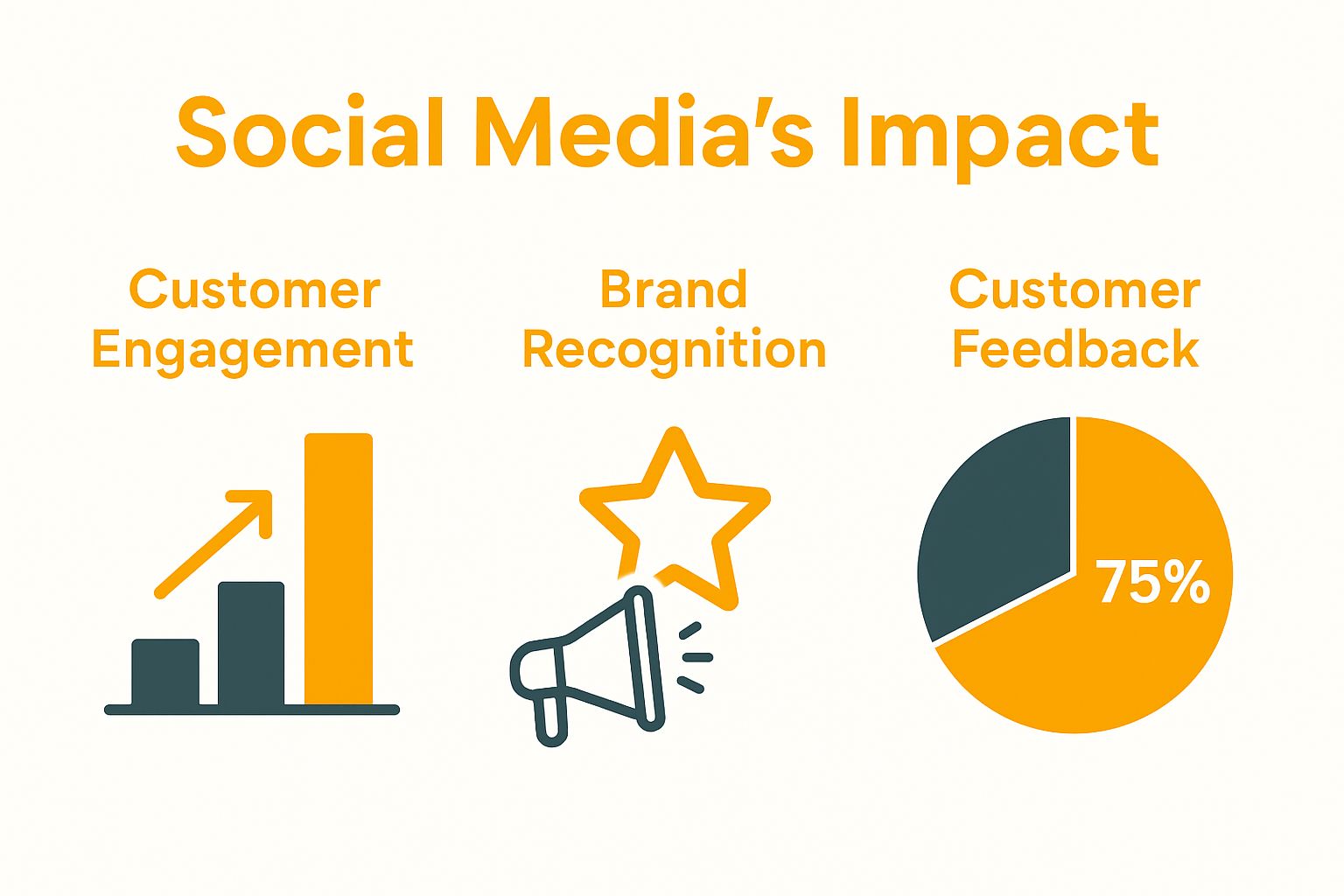
Key advantages for local businesses include:
Cost-effective marketing compared to traditional advertising
Precise audience targeting capabilities
Immediate customer feedback and engagement
Enhanced brand recognition and trust
Strategic Marketing and Customer Insights
Social media platforms provide sophisticated analytics that help businesses understand their audience better. These insights allow companies to refine their marketing strategies, develop targeted campaigns, and make data-driven decisions. Our comprehensive guide on social media marketing explores how local businesses can leverage these powerful tools to drive growth.
Moreover, social media acts as a digital storefront, allowing businesses to showcase products, share customer testimonials, and highlight their unique value proposition. By consistently sharing valuable content and engaging with their community, local businesses can transform online interactions into tangible business opportunities.
How Social Media Influences Customer Engagement
Customer engagement has undergone a profound transformation with the rise of social media platforms, creating unprecedented opportunities for businesses to connect directly with their audience. Research from Deloitte Digital Australia reveals that businesses with robust social media strategies experience significantly higher customer loyalty and retention rates.
Interactive Communication Dynamics
Social media has fundamentally redefined customer interaction by enabling real-time, multi-directional communication. Unlike traditional one-way marketing channels, these platforms allow businesses to receive immediate feedback, respond to customer queries, and create personalised experiences. Customers now expect brands to be accessible, transparent, and responsive through digital channels.
To clarify the differences, here is a comparison table between traditional marketing channels and social media, focusing on their influence on customer engagement for Australian businesses.
Aspect | Traditional Marketing | Social Media |
Communication Direction | One-way (business to customer) | Two-way/multi-directional (interactive) |
Speed of Feedback | Delayed, not instant | Immediate, real-time |
Personalisation Level | Limited, broad audience focus | Highly personalised and targeted |
Customer Participation | Passive reception | Active engagement and contribution |
Accessibility | Time/location bound | Accessible anytime, anywhere |
Trust Building | Relies on brand reputation alone | Built through authenticity and direct interaction |
Key engagement strategies include:
Responding promptly to customer comments and messages
Creating interactive content that encourages participation
Sharing behind-the-scenes insights about the business
Developing user-generated content campaigns
Trust and Relationship Building
Engagement on social media goes beyond mere transactions. It represents an opportunity to build genuine relationships and establish brand trust. By sharing authentic stories, demonstrating company values, and showing the human side of the business, organisations can create emotional connections with their audience. Our social media management guide offers comprehensive insights into developing meaningful digital relationships.
Through consistent, genuine interaction, businesses can transform passive followers into active brand advocates.

Social media platforms provide the tools to humanise brands, making them more approachable and relatable in an increasingly digital world.
Key Concepts in Social Media Strategy
Developing an effective social media strategy requires understanding the foundational principles that drive meaningful digital engagement. Research from the Australian Marketing Institute highlights the critical role of strategic planning in achieving online marketing objectives.
Strategic Content Planning
Successful social media strategies are built on purposeful content creation that aligns with business goals and audience expectations. This involves developing a comprehensive approach that goes beyond random postings to create a cohesive narrative that resonates with target audiences. Businesses must consider their unique value proposition, brand voice, and the specific needs of their customer base.
Essential strategic considerations include:
Defining clear marketing objectives
Understanding target audience demographics
Developing a consistent brand messaging framework
Selecting appropriate social media platforms
Creating a content calendar with strategic timing
Measuring and Optimising Performance
Data-driven decision making is the cornerstone of effective social media strategy. Businesses must implement robust analytics to track performance, understand audience engagement, and continuously refine their approach. Our comprehensive social media strategy guide provides deeper insights into performance measurement techniques.
The most successful social media strategies are dynamic and adaptable. They involve continuous learning, experimenting with different content formats, and staying responsive to changing digital landscapes. By maintaining flexibility and a commitment to audience-centric communication, businesses can transform their social media presence from a mere marketing channel to a powerful tool for building genuine connections and driving business growth.
Real-World Applications of Social Media Tools
Social media tools have evolved far beyond simple communication platforms, transforming into sophisticated business solutions that drive engagement, marketing, and operational efficiency. Digital technologies research demonstrates the profound impact these tools have across various industry sectors.
Marketing and Customer Engagement
Businesses now leverage social media tools for targeted marketing campaigns and customer relationship management. Platforms like Facebook, Instagram, and LinkedIn offer advanced targeting capabilities that allow companies to reach specific demographics, track user interactions, and develop personalised marketing strategies. This precision enables businesses to optimise their marketing spend and generate more meaningful customer connections.
Key practical applications include:
Creating targeted advertising campaigns
Monitoring brand sentiment and reputation
Generating customer leads and referrals
Conducting market research in real-time
Providing instant customer support channels
Operational and Communication Strategies
Beyond marketing, social media tools have become critical for internal and external communication strategies. Companies use platforms like Slack, Microsoft Teams, and professional networking sites to facilitate team collaboration, recruit talent, and maintain professional networks. Our comprehensive social media strategy guide explores how businesses can integrate these tools seamlessly into their operational frameworks.
The most innovative organisations are treating social media not just as a marketing channel, but as a comprehensive business intelligence platform. By understanding and implementing these tools strategically, businesses can gain competitive advantages, improve customer relationships, and create more responsive and adaptive organisational structures.
Ready to Transform Social Media Insights into Real Business Growth?
Many regional businesses struggle to turn social media engagement into measurable results. As highlighted in this article, building authentic customer connections, mastering strategic content planning, and making sense of analytics are no longer optional if you want to compete and grow in today’s digital landscape. These challenges can leave you feeling outpaced by bigger brands and overwhelmed by the technical side of modern marketing.

Let Marketing Recipes Australia show you a new recipe for success. Our team takes everything you learned about the power of social media and blends it with thirty years of proven marketing expertise tailored for local businesses. We do not just manage your social platforms. We deliver a complete menu of solutions including video marketing, content creation, and social media management that bring you closer to your community. Start building real relationships with your audience today. Visit Marketing Recipes Australia and discover how our tailored strategies can help your business stand out now.
Frequently Asked Questions
What is the essence of social media in business?
Social media is a digital ecosystem that enables individuals and businesses to connect, communicate, and share content across interconnected platforms, fostering real-time interaction and community building.
How can local businesses benefit from social media?
Local businesses can leverage social media for cost-effective marketing, targeted audience engagement, immediate customer feedback, and enhanced brand visibility, allowing them to compete with larger organisations.
What role do analytics play in social media strategies?
Analytics help businesses understand their audience better by tracking performance and engagement, allowing for data-driven decisions, refinement of marketing strategies, and development of targeted campaigns.
How does social media influence customer engagement?
Social media transforms customer engagement by enabling real-time, two-way communication. It encourages immediate feedback and creates opportunities for relationship building, helping brands establish trust and loyalty among customers.
Recommended
Comments